On April 25th, AdWords Specialists hosted a Hangout on Air as the last installment of the Enhanced Campaigns Hangouts on Air series.
To watch the full 20-minute Hangout on Air, visit the Google Business YouTube channel.
During the Hangout, Wes explains how to adjust bids for mobile devices. He does an account walk through, demonstrating how to adjust bids for the time of day, location and device. For example, if a user is on a mobile device near your store during regular business hours, it may make sense to increase the bid. Wes explains how to calculate the actual bids when using multiple bid adjustments at the same time.
Andy then explains how to create mobile preferred ad texts and mobile preferred ad extensions. He emphasizes the importance of sending users on mobile devices to optimized mobile websites, and briefly touches upon ValueTrack parameters. This blog post further explains how to use ValueTrack parameters to manage URLs by device.
To learn more about how to get started with AdWords, visit our help center, check out the AdWords Community Forum, or call us at 866-2-GOOGLE if you already have an AdWords account.
And remember to tune in to the live stream of our next Hangout on Air at 11 a.m. PDT, Thursday May 9th, when our specialists discuss the ad approvals process in detail.
Showing posts with label mobile. Show all posts
Showing posts with label mobile. Show all posts
Monday, April 29, 2013
Tuesday, May 8, 2012
GoMo: Mark your calendar to ‘Hangout on Air’ and learn how to build a mobile site in minutes
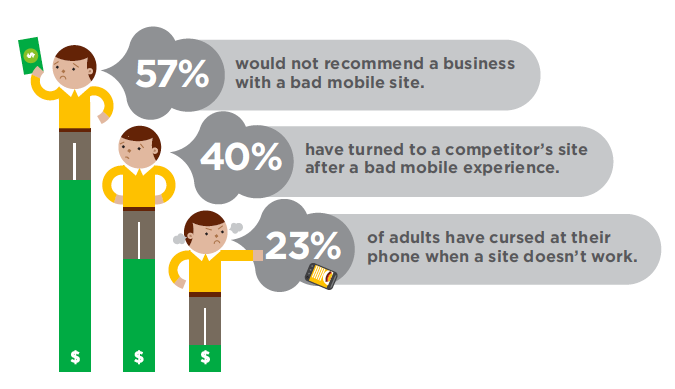
Did you know that 40% of mobile web users reported that they’ve turned to a competitor’s site after a bad mobile experience1? With about half of all Americans now owning a smartphone2, it’s time for businesses to meet user expectations by delivering a mobile experience as good as the desktop experience. In short, it’s time to step up to the plate and build a site optimized for the mobile web.
Google can help. We recently teamed up with DudaMobile to release a free mobile site builder. In three easy steps you’re able to get started with mobile: (1) enter your site’s URL, (2) customize your site and (3) redirect mobile users automatically to the new mobile-friendly version. It’s free and takes just a few minutes to complete!
Join us on Thursday, May 10th at 1pm EST/10am PST and watch as Google showcases how two businesses, Top Mast Resort in Massachusetts and Sava’s Restaurant in Michigan, go mobile and build mobile-friendly sites--live on air.
You’ll see how Top Mast is preparing to take advantage of mobile travel purchase intent - which is five times higher than online travel purchase intent, according to InsightExpress. You’ll also see Sava’s move ahead of 95% of restaurants that do not have mobile-friendly sites, according to a study by Restaurant Science.
Finally, you’ll hear from the CMO of Dudamobile, Dennis Mink; he’ll talk about best practices when using the mobile site builder and walk through important questions to ask yourself when building a mobile-friendly site.
Details on how to tune in:
Posted by Suzanne Mumford, Google Mobile Ads Marketing
Source: (1) Gomez 2011 (2) Nielsen February 2012
Google can help. We recently teamed up with DudaMobile to release a free mobile site builder. In three easy steps you’re able to get started with mobile: (1) enter your site’s URL, (2) customize your site and (3) redirect mobile users automatically to the new mobile-friendly version. It’s free and takes just a few minutes to complete!
Join us on Thursday, May 10th at 1pm EST/10am PST and watch as Google showcases how two businesses, Top Mast Resort in Massachusetts and Sava’s Restaurant in Michigan, go mobile and build mobile-friendly sites--live on air.
You’ll see how Top Mast is preparing to take advantage of mobile travel purchase intent - which is five times higher than online travel purchase intent, according to InsightExpress. You’ll also see Sava’s move ahead of 95% of restaurants that do not have mobile-friendly sites, according to a study by Restaurant Science.
Finally, you’ll hear from the CMO of Dudamobile, Dennis Mink; he’ll talk about best practices when using the mobile site builder and walk through important questions to ask yourself when building a mobile-friendly site.
Details on how to tune in:
- Sign into Google+ on Thursday, May 10 at 1 p.m. EST/10 a.m. PST
- Go to the Think with Google Google+ page
- Look for the stream post and click to enter the live stream
Posted by Suzanne Mumford, Google Mobile Ads Marketing
Source: (1) Gomez 2011 (2) Nielsen February 2012

Wednesday, October 19, 2011
Small businesses in NYC help fight breast cancer with Pink Pin
This October and November, Google and Susan G. Komen for the Cure are taking the fight against breast cancer to New York City with the Pink Pin initiative. The Pink Pin initiative is a way for businesses to support the fight against breast cancer by encouraging consumers to donate to the search for a cure.
Physical businesses who register at PinkPin.com will be marked with a Pink Pin on our map. Customers who visit these businesses will be able to donate to Susan G. Komen for the Cure at stores via mobile phones. The more customers businesses reach, the more of an impact Pink Pin will have—and the closer we’ll be to a cure. We’re also encouraging businesses and consumers to inspire others by sharing their stories about the cause online at www.pinkpin.com. Our goal is to raise hope, raise spirits and raise more than $100,000 for Susan G. Komen for the Cure.
So get involved, get on the map, share your stories and be a part of Pink Pin. With the support of small businesses like yours, Google and Susan G. Komen for the Cure can help take breast cancer off the map.
Physical businesses who register at PinkPin.com will be marked with a Pink Pin on our map. Customers who visit these businesses will be able to donate to Susan G. Komen for the Cure at stores via mobile phones. The more customers businesses reach, the more of an impact Pink Pin will have—and the closer we’ll be to a cure. We’re also encouraging businesses and consumers to inspire others by sharing their stories about the cause online at www.pinkpin.com. Our goal is to raise hope, raise spirits and raise more than $100,000 for Susan G. Komen for the Cure.
So get involved, get on the map, share your stories and be a part of Pink Pin. With the support of small businesses like yours, Google and Susan G. Komen for the Cure can help take breast cancer off the map.
Wednesday, January 12, 2011
Now available: Google Places with Hotpot for iPhone
[Cross-posted from the Hotpot Community blog]
We recently released Google Places with Hotpot in Google Maps for Android, and starting now, you can have that same great experience as an iPhone app. We realize the importance of finding places you’ll love while you’re out and about, no matter what mobile device you use. And Places with Hotpot not only helps you find places near where you are, it gives you the best places to go for you by personalizing your search results.
In case you aren’t familiar with Google Places, it lets you quickly search for places nearby and personalizes the results based on places you’ve rated. We get you started with a few popular search categories, but you can also tailor the list by adding your own favorite searches. This makes it fast and easy to find the best places for you with little fuss.

It can be pretty rewarding to discover a new place you love, but we also realize that there are some experiences you just can’t wait to share. So Places makes it super simple to rate a place with your iPhone while you’re there. Just fire up the app and hit “Rate now.” It will use your location to guess your current place and let you post a Hotpot review right from your phone. But it’s not just about getting to say what you think—the more you rate places, the more you’re sharing about your tastes and the more we can give you personally tailored recommendations.

If you want to make things even tastier, just visit google.com/hotpot from your desktop computer. Here you can add friends to the mix and quickly rate all the places you already know. Once you’ve added friends, you’ll find your results seasoned not just with reviews from around the web and recommendations based on your own personal taste, but also with your friends’ opinions too.

Get the Places app on your iPhone now by searching for Google Places in the App Store or going here.
This first version of Places is available for all iOS devices in English only. However, expect more features and improvements to roll out soon, including localization in many new languages. We’re hard at work to make Places with Hotpot more and more delicious.
We recently released Google Places with Hotpot in Google Maps for Android, and starting now, you can have that same great experience as an iPhone app. We realize the importance of finding places you’ll love while you’re out and about, no matter what mobile device you use. And Places with Hotpot not only helps you find places near where you are, it gives you the best places to go for you by personalizing your search results.
In case you aren’t familiar with Google Places, it lets you quickly search for places nearby and personalizes the results based on places you’ve rated. We get you started with a few popular search categories, but you can also tailor the list by adding your own favorite searches. This makes it fast and easy to find the best places for you with little fuss.

Use a default search category, save your own, or rate the nearest place quickly.
It can be pretty rewarding to discover a new place you love, but we also realize that there are some experiences you just can’t wait to share. So Places makes it super simple to rate a place with your iPhone while you’re there. Just fire up the app and hit “Rate now.” It will use your location to guess your current place and let you post a Hotpot review right from your phone. But it’s not just about getting to say what you think—the more you rate places, the more you’re sharing about your tastes and the more we can give you personally tailored recommendations.

Give your star rating and add optional details or a review so Hotpot knows your taste.
If you want to make things even tastier, just visit google.com/hotpot from your desktop computer. Here you can add friends to the mix and quickly rate all the places you already know. Once you’ve added friends, you’ll find your results seasoned not just with reviews from around the web and recommendations based on your own personal taste, but also with your friends’ opinions too.

Once you start rating and add friends, Places can give you personalized recommendations.
Get the Places app on your iPhone now by searching for Google Places in the App Store or going here.
This first version of Places is available for all iOS devices in English only. However, expect more features and improvements to roll out soon, including localization in many new languages. We’re hard at work to make Places with Hotpot more and more delicious.
Saturday, October 24, 2009
4 STRATEGIC PRINCIPLES FOR EVERY DIGITAL PUBLISHER
As publishers move more and more content to the Internet, mobile services, and e-readers, these digital activities change the structures and processes of underlying business operations. Many publishers, however, pay insufficient attention to the implications of these changes and thus miss out on many benefits possible with digital operations.
This occurs because publishers become focused on issues of content delivery and uncritically accept the fundamental elements of the processes involving platforms and intermediaries. In order to gain the fullest future benefits from the digital environment, however, publishers needs to strategically consider and direct activities involving the users, advertisers, prices, and purposes of their new platforms.
In creating business arrangements with platform and service providers and intermediaries, 4 fundamental strategic principles should guide your actions:
1. Control your customer lists. The most important thing you do as a publisher is to create relationships with and experiences for your customers. It is crucial to ensure that your content distribution and retail systems do not separate you from those who read, view, or listen to your content. If you do not operate your distribution or pay systems, or don’t have strong influence over their operations, this important part of the customer experience falls outside your control and— worse—you never establish direct relationships with customers that allow you to get to know them better, to create stronger bonds, to use them to improve your products, or to up-sell services. If you must use intermediaries, ensure that you have full access and rights to use e-mail, mobile, and other addresses for all your content customers and that you have some influence over the look, feel, and content of the contacts that your service providers have with your customers.
2. Control advertising in your digital space. Users see advertising placed on your website, your mobile messages, and your e-reader content as part of your product and it affects the experience you deliver to them. It is not enough to control the size and placement of ads; you also need to control the dynamic functionality, types, and content of ads. The experience your product delivers is of little interest to outside providers of digitally delivered advertising, but it must be to you. You should control your own advertising inventory and maintain approval rights and—as with audiences—you should have the ability to make direct contact with advertising customers so you can add value by working with them to achieve greater effectiveness and provide better benefits across your content platforms.
3. Control your own pricing. Do not put yourself in the position of merely accepting the ad suppliers’ price and payment for advertising appearing in your digital product. The digital space and audience contact that you provide is the product and service being purchased and some contact is more valuable than others. Know how your value compares to that of competitors and set your prices according. Don’t be a price taker, be a price maker. Digital advertising will not grow to become an important part of your business if you let the most important decision of the revenue model reside in someone who does not care about your business.
4. Drive customers to platforms most beneficial to you. Digital media give you the opportunities to serve customers where and when they want to be served, but you need to use those opportunities to drive them to your financially most important product. Internet sites, e-readers, mobile applications, and social media are highly useful for contact and interaction, but not yet very effective for revenue generation. The best effects typically result from increasing use of your offline product or driving traffic to your most finally effective digital location. Make sure that all the distribution platforms you use are configured for easy movement to other digital platforms that benefit you most, even if they don’t directly benefit your service provider.
Digital publishing can only become successful if you get the business fundamentals correct by controlling the most important commercial aspects of the operation. The value configuration created by customer interfaces and partner networks must be arranged to work in your favor and strategic thinking needs to guide how you organize and direct those activities.
This occurs because publishers become focused on issues of content delivery and uncritically accept the fundamental elements of the processes involving platforms and intermediaries. In order to gain the fullest future benefits from the digital environment, however, publishers needs to strategically consider and direct activities involving the users, advertisers, prices, and purposes of their new platforms.
In creating business arrangements with platform and service providers and intermediaries, 4 fundamental strategic principles should guide your actions:
1. Control your customer lists. The most important thing you do as a publisher is to create relationships with and experiences for your customers. It is crucial to ensure that your content distribution and retail systems do not separate you from those who read, view, or listen to your content. If you do not operate your distribution or pay systems, or don’t have strong influence over their operations, this important part of the customer experience falls outside your control and— worse—you never establish direct relationships with customers that allow you to get to know them better, to create stronger bonds, to use them to improve your products, or to up-sell services. If you must use intermediaries, ensure that you have full access and rights to use e-mail, mobile, and other addresses for all your content customers and that you have some influence over the look, feel, and content of the contacts that your service providers have with your customers.
2. Control advertising in your digital space. Users see advertising placed on your website, your mobile messages, and your e-reader content as part of your product and it affects the experience you deliver to them. It is not enough to control the size and placement of ads; you also need to control the dynamic functionality, types, and content of ads. The experience your product delivers is of little interest to outside providers of digitally delivered advertising, but it must be to you. You should control your own advertising inventory and maintain approval rights and—as with audiences—you should have the ability to make direct contact with advertising customers so you can add value by working with them to achieve greater effectiveness and provide better benefits across your content platforms.
3. Control your own pricing. Do not put yourself in the position of merely accepting the ad suppliers’ price and payment for advertising appearing in your digital product. The digital space and audience contact that you provide is the product and service being purchased and some contact is more valuable than others. Know how your value compares to that of competitors and set your prices according. Don’t be a price taker, be a price maker. Digital advertising will not grow to become an important part of your business if you let the most important decision of the revenue model reside in someone who does not care about your business.
4. Drive customers to platforms most beneficial to you. Digital media give you the opportunities to serve customers where and when they want to be served, but you need to use those opportunities to drive them to your financially most important product. Internet sites, e-readers, mobile applications, and social media are highly useful for contact and interaction, but not yet very effective for revenue generation. The best effects typically result from increasing use of your offline product or driving traffic to your most finally effective digital location. Make sure that all the distribution platforms you use are configured for easy movement to other digital platforms that benefit you most, even if they don’t directly benefit your service provider.
Digital publishing can only become successful if you get the business fundamentals correct by controlling the most important commercial aspects of the operation. The value configuration created by customer interfaces and partner networks must be arranged to work in your favor and strategic thinking needs to guide how you organize and direct those activities.
Saturday, March 28, 2009
EVERYONE'S NOT ATWITTER
Journalists and technology writers are enamored with communications technology and tend to portray successful technologies as representing large scale trends. We are regularly presented with news stories and promotional materials about the rise of new technologies and about how their uses create social trend that are significantly altering society.
The release of the new iPhone was recently featured on network evening news, Blackberry has been heavily discussed because its use by Pres. Obama, and Twitter has been featured in numerous television and newspaper stories. The impression given by coverage is that anyone who doesn’t have an iPhone or Blackberry and anyone who doesn’t Twitter is out of touch with the mainstream and being left out of modern society.
These new means of communications offer interesting possibilities, but their consumption needs to be seen realistically. Blackberry, for example, has 14 million subscribers-- about 5 percent of all mobile phone users in the US. iPhones represents about 1 percent of mobile phone users. The number of Twitter users is currently around 1 million, representing only about 3 tenths of 1 percent of the US population.
Certainly those kinds of numbers can create businesses successes for their firms, but we have to be realistic in interpreting their overall impact on technology markets, social interaction, and diffusion of technologies. Not everyone wants to or will be equally wired, communicating, or sharing mundane details of their lives with their friends and the world. Some persons will find communications enabling technologies more rewarding in business and personal terms than other persons.
It is easy to forget the size of market when discussing the impact of diffusion of technologies. Without doing so, however, one gets a warped sense of their role in contemporary life.
The release of the new iPhone was recently featured on network evening news, Blackberry has been heavily discussed because its use by Pres. Obama, and Twitter has been featured in numerous television and newspaper stories. The impression given by coverage is that anyone who doesn’t have an iPhone or Blackberry and anyone who doesn’t Twitter is out of touch with the mainstream and being left out of modern society.
These new means of communications offer interesting possibilities, but their consumption needs to be seen realistically. Blackberry, for example, has 14 million subscribers-- about 5 percent of all mobile phone users in the US. iPhones represents about 1 percent of mobile phone users. The number of Twitter users is currently around 1 million, representing only about 3 tenths of 1 percent of the US population.
Certainly those kinds of numbers can create businesses successes for their firms, but we have to be realistic in interpreting their overall impact on technology markets, social interaction, and diffusion of technologies. Not everyone wants to or will be equally wired, communicating, or sharing mundane details of their lives with their friends and the world. Some persons will find communications enabling technologies more rewarding in business and personal terms than other persons.
It is easy to forget the size of market when discussing the impact of diffusion of technologies. Without doing so, however, one gets a warped sense of their role in contemporary life.
Wednesday, January 2, 2008
ONLINE AND MOBILE REVENUE POTENTIAL DRIVE COMPENSATION DISPUTES
The issues in the Hollywood writer’s strike, which began Nov. 5, are symptomatic of a broader challenges that online and mobile media pose for all content creators. The fundamental issues for all media involve how to obtain revenue for content distributed by digital media and how to share revenue from those downloads.
In the Hollywood case, the central issues revolve around new media residuals for advertising supported video downloads of content prepared for TV and motion pictures, made for Internet content, and other streaming video. Screen writers, who did not foresee the success of VCR and DVD sales of motion pictures and television programs in past negotiations, are determined to receive greater compensation for the growing business in digital downloads.
The Alliance of Motion Picture & Television Producers argues that business potential of new media is uncertain and does not wish stipulate a monetary value for it. The Writer's Guild of America has asked for a $250 residual for one year of unlimited streaming of an hour-long show and 3-cents-per-download—the rate writer’s receive for DVD sales.
The rhetoric of the dispute has involved standard finger pointing with the producers’ group accusing writers of “quixotic pursuit of radical demands” and the writers accusing the producers of “corporate greed.”
Whatever the truth of those claims and the outcome of the work stoppage, there will be more disagreements in the coming years among those who actually produce content and those who employ creators or ultimately own the content because the issues are far broader and deeper than the screen writers challenging program and film producers. The underlying issue of what compensation creators deserve is growing in all media industries and digital downloads increasingly play important roles in their businesses.
In the past 20 years, at the behest of large commercial media firms, Congress past more copyright legislation than in all the years of the previous century combined. It extended the length of copyright, gave copyright protection to performers, games, and broadcasts, provided more protection and stronger penalties for digital than analogue content, and criminalized copyright violations.
The rhetoric of the media industry throughout the debates was consistent: If creators of content aren’t protected and compensated, no one will create articles, books, music, scripts, etc. However, the effect of the copyright legislation did not effectively strengthen the position of authors, composer, performers, or artists, but reinforced the power of copyright owners--essentially film, television, and recording companies, newspaper, magazine, and book publishers. Today, creators of content are now beginning to use the rhetoric that media firms used in copyright debates in their attempts to gain more compensation because of the growing revenue streams in digital media.
Although the full financial future of digital media is uncertain—as in any emerging industry, media firms are investing billions based on an upbeat assessment of its business opportunities. Twentieth Century Fox just announced a deal to rent its movies through digital downloads from the iTunes Store, which sold more than 200 million video downloads in 2007. Viacom signed a $500 million online advertising and content distribution deal with Microsoft covering the websites they both operate such as MTV, Comedy Central, MSN, and Xbox Live. You Tube was purchased by Google for $1.65 million and subsequently acquired the ad-serving firm DoubleClick for $3.1 billion in order to improve its ability to earn ad revenue on You Tube and other sites.
Although there is business risk involved in these ventures, digital media are clearly growing and are expected to produce handsome rewards. Downloads of movies and TV produced only $250 million in 2007, but are forecasted to reach nearly $2 billion in just 2 years. Digital downloads of music have already surpassed that mark and U.S. newspapers had online advertising revenue of $2.6 billion in 2006. There is money to be made in digital media and the amount is rising rapidly.
The growing value of digital downloads is one of the reasons why Viacom sued You Tube in 2007 for $1 billion in damages when 160,000 clips of its programs that were found on the online site. When media companies sue each other, you know that real money is at stake.
Arguments made by Hollywood producers that they are uncertain if there is money to be made in downloads are hollow given their own investments. It appears they are trying to reduce their business risk and to increase their profits by keeping writers’ compensation low and stropping them from gaining a stake in the growth of downloads.
The issues of compensation that led screenwriters to strike are confronting writers and photographers for newspapers, magazines, and books, independent video producers posting material on social media sites, and citizen journalists whose articles, photos, and videos are being use by commercial media and their digital sites--sometimes replacing paid content of professionals.
Now that online services are beginning to generate significant revenue streams for print media, journalists’ and writers’ desires to gaining more compensation for those uses of their work are rising. Although some papers and magazines agreed to provide nominal payments or salary increases for secondary uses of print content online, most have not yet come to terms over the growing revenue stream and how its benefits should be shared.
One can expect issues of compensation for digital materials to gain greater significance as negotiating points for the Newspaper Guild and the National Writer’s Union in the years to come. Both have lent their support to the Writer’s Guild of America and their members are increasingly aware of the effects of the new revenue streams on the companies that employ them.
In the Hollywood case, the central issues revolve around new media residuals for advertising supported video downloads of content prepared for TV and motion pictures, made for Internet content, and other streaming video. Screen writers, who did not foresee the success of VCR and DVD sales of motion pictures and television programs in past negotiations, are determined to receive greater compensation for the growing business in digital downloads.
The Alliance of Motion Picture & Television Producers argues that business potential of new media is uncertain and does not wish stipulate a monetary value for it. The Writer's Guild of America has asked for a $250 residual for one year of unlimited streaming of an hour-long show and 3-cents-per-download—the rate writer’s receive for DVD sales.
The rhetoric of the dispute has involved standard finger pointing with the producers’ group accusing writers of “quixotic pursuit of radical demands” and the writers accusing the producers of “corporate greed.”
Whatever the truth of those claims and the outcome of the work stoppage, there will be more disagreements in the coming years among those who actually produce content and those who employ creators or ultimately own the content because the issues are far broader and deeper than the screen writers challenging program and film producers. The underlying issue of what compensation creators deserve is growing in all media industries and digital downloads increasingly play important roles in their businesses.
In the past 20 years, at the behest of large commercial media firms, Congress past more copyright legislation than in all the years of the previous century combined. It extended the length of copyright, gave copyright protection to performers, games, and broadcasts, provided more protection and stronger penalties for digital than analogue content, and criminalized copyright violations.
The rhetoric of the media industry throughout the debates was consistent: If creators of content aren’t protected and compensated, no one will create articles, books, music, scripts, etc. However, the effect of the copyright legislation did not effectively strengthen the position of authors, composer, performers, or artists, but reinforced the power of copyright owners--essentially film, television, and recording companies, newspaper, magazine, and book publishers. Today, creators of content are now beginning to use the rhetoric that media firms used in copyright debates in their attempts to gain more compensation because of the growing revenue streams in digital media.
Although the full financial future of digital media is uncertain—as in any emerging industry, media firms are investing billions based on an upbeat assessment of its business opportunities. Twentieth Century Fox just announced a deal to rent its movies through digital downloads from the iTunes Store, which sold more than 200 million video downloads in 2007. Viacom signed a $500 million online advertising and content distribution deal with Microsoft covering the websites they both operate such as MTV, Comedy Central, MSN, and Xbox Live. You Tube was purchased by Google for $1.65 million and subsequently acquired the ad-serving firm DoubleClick for $3.1 billion in order to improve its ability to earn ad revenue on You Tube and other sites.
Although there is business risk involved in these ventures, digital media are clearly growing and are expected to produce handsome rewards. Downloads of movies and TV produced only $250 million in 2007, but are forecasted to reach nearly $2 billion in just 2 years. Digital downloads of music have already surpassed that mark and U.S. newspapers had online advertising revenue of $2.6 billion in 2006. There is money to be made in digital media and the amount is rising rapidly.
The growing value of digital downloads is one of the reasons why Viacom sued You Tube in 2007 for $1 billion in damages when 160,000 clips of its programs that were found on the online site. When media companies sue each other, you know that real money is at stake.
Arguments made by Hollywood producers that they are uncertain if there is money to be made in downloads are hollow given their own investments. It appears they are trying to reduce their business risk and to increase their profits by keeping writers’ compensation low and stropping them from gaining a stake in the growth of downloads.
The issues of compensation that led screenwriters to strike are confronting writers and photographers for newspapers, magazines, and books, independent video producers posting material on social media sites, and citizen journalists whose articles, photos, and videos are being use by commercial media and their digital sites--sometimes replacing paid content of professionals.
Now that online services are beginning to generate significant revenue streams for print media, journalists’ and writers’ desires to gaining more compensation for those uses of their work are rising. Although some papers and magazines agreed to provide nominal payments or salary increases for secondary uses of print content online, most have not yet come to terms over the growing revenue stream and how its benefits should be shared.
One can expect issues of compensation for digital materials to gain greater significance as negotiating points for the Newspaper Guild and the National Writer’s Union in the years to come. Both have lent their support to the Writer’s Guild of America and their members are increasingly aware of the effects of the new revenue streams on the companies that employ them.
Friday, December 28, 2007
MONETIZATION CHALLENGES IN DIGITAL VIDEO MEDIA
The real challenges facing media companies today are not technology or opportunities, but how to monetize activities in digital video media. The popularity of video downloads and streaming video on internet and mobile devices is growing exponentially and motion picture and television production companies are rushing to create deals to participate in the phenomenon.
The biggest challenge is finding workable business models. A combination of technology and capricious consumers are altering existing media business models and making success with new models difficult. The traditional business models of media are eroding as audiences and advertisers respond to changing media markets and today both legacy and new media are struggling to find effective new business models for their existing operations and new products and services.
It is complicated because a fundamental shift in financing media is underway and many companies are finding it difficult to adjust their business perspective. During the period of industrial society consumers made relatively few direct payments for media and business models worldwide were based primarily on advertising expenditures, license fees, and tax payments. In post-industrial society, the rise of new social and economic arrangements and the proliferation of types of media and media content, business models are shifting toward a consumer model. Today, for every dollar spent in the U.S. on media by advertisers, consumers now spend 7 dollars. Media have shifted from a supply driven market to a demand driven market.
This means that companies must spend a good deal of effort ensuring they are creating value for customers. However, it is not enough to create value for customers. At the end of the day, economic value must be created for the company or it is not running a business.
Although media firms are rapidly entering digital video provision, there are significant business problems with contemporary deals involving new forms of digital video media. Companies are not buying return on investment, but are buying market share in hopes that income will follow. The trend is especially evident in social media, where companies are pinning their hopes on Internet advertising growth and increased abilities to better target advertising. It is a big gamble because social media users have been ad averse and click through rates are less than one-tenth of those on other internet sites.
You Tube was purchased by Google for $1.65 billion but has advertising revenues of about $250 million and My Space, which was acquired by News Corp. for $580 million, receives about $450 million in advertising revenue. On the face of those numbers these do not appear to be rationale business investments, but what the firms are actually doing is buying large audiences in hopes of positioning themselves as leaders in online advertising.
They are doing so because Internet advertising expenditures are heavily concentrated and the top 10 sites in the U.S. account for 70 percent of the total advertising expenditures. The high prices for social media are part of a fight for the top because of the ad revenue concentration. The companies are taking a business risk that may or may not pay off depending on the willingness of the users of those social media to accept advertising and monitoring of their activities.
Across digital video media we are now seeing a variety of company strategies. Some firms are pursuing ad-supported free media business models, whereas other firms are taking the road toward conditional access as part of subscriptions to Internet and mobile services. Still others are mixing income streams from both conditional access and advertising. The industry is not yet mature enough and consumer preferences are not yet clear enough to determine which will be the most successful revenue model. As a result, firms need to be agile, flexible, and able to change rapidly in their approach to digital video media.
The biggest challenge is finding workable business models. A combination of technology and capricious consumers are altering existing media business models and making success with new models difficult. The traditional business models of media are eroding as audiences and advertisers respond to changing media markets and today both legacy and new media are struggling to find effective new business models for their existing operations and new products and services.
It is complicated because a fundamental shift in financing media is underway and many companies are finding it difficult to adjust their business perspective. During the period of industrial society consumers made relatively few direct payments for media and business models worldwide were based primarily on advertising expenditures, license fees, and tax payments. In post-industrial society, the rise of new social and economic arrangements and the proliferation of types of media and media content, business models are shifting toward a consumer model. Today, for every dollar spent in the U.S. on media by advertisers, consumers now spend 7 dollars. Media have shifted from a supply driven market to a demand driven market.
This means that companies must spend a good deal of effort ensuring they are creating value for customers. However, it is not enough to create value for customers. At the end of the day, economic value must be created for the company or it is not running a business.
Although media firms are rapidly entering digital video provision, there are significant business problems with contemporary deals involving new forms of digital video media. Companies are not buying return on investment, but are buying market share in hopes that income will follow. The trend is especially evident in social media, where companies are pinning their hopes on Internet advertising growth and increased abilities to better target advertising. It is a big gamble because social media users have been ad averse and click through rates are less than one-tenth of those on other internet sites.
You Tube was purchased by Google for $1.65 billion but has advertising revenues of about $250 million and My Space, which was acquired by News Corp. for $580 million, receives about $450 million in advertising revenue. On the face of those numbers these do not appear to be rationale business investments, but what the firms are actually doing is buying large audiences in hopes of positioning themselves as leaders in online advertising.
They are doing so because Internet advertising expenditures are heavily concentrated and the top 10 sites in the U.S. account for 70 percent of the total advertising expenditures. The high prices for social media are part of a fight for the top because of the ad revenue concentration. The companies are taking a business risk that may or may not pay off depending on the willingness of the users of those social media to accept advertising and monitoring of their activities.
Across digital video media we are now seeing a variety of company strategies. Some firms are pursuing ad-supported free media business models, whereas other firms are taking the road toward conditional access as part of subscriptions to Internet and mobile services. Still others are mixing income streams from both conditional access and advertising. The industry is not yet mature enough and consumer preferences are not yet clear enough to determine which will be the most successful revenue model. As a result, firms need to be agile, flexible, and able to change rapidly in their approach to digital video media.
Subscribe to:
Posts (Atom)